Dryland Pasture Seed Mix
$ 4.10
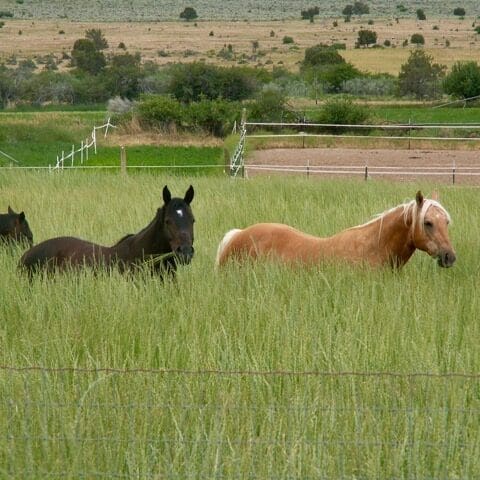
Dryalnd Pasture Mix Distribution Area Min. to Max. Annual Precipitation40in.Average Max. Height Designed for farm, ranch and range with no irrigation. Grows well on the annual precipitation available in most arid States excluding parts of the Sonoran and Mojave desert. Not suited for states east of the Mississippi River. Requires a minimum of 10″ annual precipitation. With good grazing practices and sufficient precip it has been baled at least once annually. Can be fall and winter grazed. Effective for disturbed sites and erosion control. Dryland Pasture Grasses usally compete well with weeds. General Description: Dryland Pasture Seed Mix is designed for farm, ranch and range where no irrigation is present. It grows well on the annual precipitation available in most areas of the United States excluding very arid climates like the Sonoran and Mojave desert. It will grow on a minimum of 10″ annual precipitation. If some sprinkler or flood irrigation is present or annual precipitation averages 11-13 inches yield will improve. We have selected dryland pasture grasses that persist in droughty conditions and provide high quality forage. In areas of 12 inches of annual precipitation dryland pasture grass has been and bailed at least once annually. Can be fall and winter grazed as pasture. It is an excellent dual-purpose product adapted to a wide range of dryland ecosystems. It is efficient and multi-purpose. Wheatgrass Orchardgrass Bromegrass Wildrye Alfalfa For specific species in mix please call our office as mix changes per batch depending on what we have in stock. Uses: Dryland Pasture Mix is effective for disturbed sites and erosion control. Competes well with weeds, especially when it is sown in late summer or fall, giving it the upper hand against weedy spring annuals. Planting Conditions: Our Dryland pasture mix prefers a poorly drained soil. The varieties do not survive well in sandy soils. It can be planted in areas that receive as little as 10″ of annual precipitation. When planting it is advised to scratch the surface of the soil with a harrow. After using a harrow walk on the soil and if boot sinks deeper than a 1/2″ then firm the soil by driving on top of it then plant the seeds. This will ensure that seeds don’t sink deeper in the soil once moisture is introduced. For more information on planting conditions give our office a call as it varies per planting site. Planting Time: For dryland seeding late fall planting is the best time. When planting late fall ensure that night temperatures are freezing and day temperatures are cool. This will allow the seeds to lay dormant throughout the winter, germinating in the spring once the soil temperatures have reached between 50-60 degrees. For an early fall planting you need at least 8 weeks of good growth before your first hard freeze. Keep seeds watered so the soil does not dry out (high frequency, low duration) until grass is about 4-6″ tall, then switch to a low frequency, high duration cycle. For a spring planting ensure that the seed is planted after the last frost date. Keep watered so the soil does not dry out (high frequency, low duration) until grass is about 4-6″ tall, then switch to a low frequency, high duration cycle. Summer plantings are successful in the Great Plains if sown before summer monsoons/rainfall. Seeding Rate: Plant no deeper than 1/4″ Drill: 16lb. per acre Broadcast: 20lb. per acre Best results are acheived by correct and careful drill seeding or broadcast seeding. Broadcast is the most common sowing method. If the drill method is used, take care to plant no deeper than 1/4″. Prepare the soil with some form of light disturbance such as a spike-tooth harrow. Methods will vary from site to site and will depend upon your equipment and size of your planting area. Firm seed-to-soil contact will enhance establishment, as will rolling or packing, but do not bury pasture grass seed. Refer to the analysis tag on each bag for planting instructions and additional helpful information. For more details click the “additional information” tab above. FAQ: Is this product is suitable for lawn or turf in yards and outlying areas? We don’t recommend Dryland Paste Mix as turf. It can be used as ground cover, and the distinction is one of semantics and aesthetics. The root clumps of the bunch grasses make it difficult (but not impossible) to mow. The species are not fine stemmed and the plants are generally too tall for mowing once established. Dryland pasture seed mix is a good choice for outlying areas that are not heavily traveled, or where coverage is desired over bare ground, where little mowing will occur, or for weed control. For additional information see our Dryland Pasture Mix blogpost. Customer PhotoA freshly cut field of Dryland Pasture Mix in windrows, ready to bale. Customer submitted photo, Fiona S. from NM. The graphic above should provide a good visual reference of proper seeding depth. Note: The roll/pack step is highly recommended (but not necessary) with the broadcast seeding method. We do NOT recommend you roll/pack after drilling unless you are absolutely certain your drill is set to the shallowest possible drill depth – no more than .25″. A drill depth set too deep will result in buried seeds, poor germination and poor establishment – or failure. Left: Ideal soil prep and proper broadcast method seed depth. The seeds have good soil contact on an even seed bed. Right: Large dirt clods result in poor soil contact and uneven establishment. To the best of your ability, prepare an even, disturbed seed bed. What is “correct” or “ideal” will vary with your circumstances. In a range situations or on rocky ground the soil in the left photo is unrealistic. Pasture mixes &Correct Sowing Methods Correct sowing method is crucial for the establishment of healthy pasture. Few things have so direct an effect on success – or failure. The following methods are recommended: Broadcast Roll (BEST): Broadcast seed on a prepared seed bed. In small plots this is easy done by hand. For medium plots, a fertilizer broadcaster works well. In large-scale seedings a tractor/truck/SUV mounter fertilizer spreader works well. After broadcasting, walking on the area works in small areas and accomplishes the same goal as a roller. In med-large scale seedings, compact the soil surface with a push-roller or a roller mounted to a vehicle or tractor. The goal of the roller is to “press” the seed into the soil surface, ensuring the best possible soil contact. Broadcast (GOOD): Broadcast seed on a prepared seed bed. In small plots this is easy done by hand. For medium plots, a fertilizer broadcaster works well. In large-scale seedings a tractor/truck/SUV mounter fertilizer spreader works well. DO NOT attempt to bury the seed after broadcasting. Drilling (GOOD, BUT MUST BE DONE CORRECTLY): There are countless brands and styles of drills. Each are set to their specific make and model – there is no “universal” setting. Set your drill to the desired seeding rate and lift disks to barely scratch the surface. DO NOT bury the seeds. One of the leading causes of establishment failure is sowing too deep. Custom Seed MixingYour Seed, Your Way Don’t see what you like? Do you have specific needs? Give us a call – we can mix up any custom recipe! Since 1974 we have prided ourselves on addressing the specific needs of our customers. If you have unique soil, water, environmental or end-use needs we can work up a mix that will work best for you.